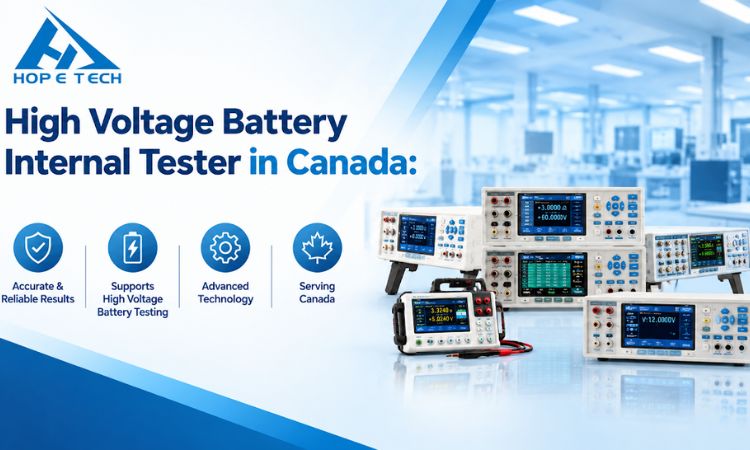
High-voltage batteries are increasingly important in electric vehicles, energy storage systems, industrial equipment, and other advanced electrical applications. As battery technologies evolve, manufacturers and testing laboratories need dependable equipment to evaluate electrical characteristics, monitor quality, and maintain consistent testing procedures.
A High Voltage Battery Internal Tester in Canada can help businesses assess important battery parameters, including internal resistance and voltage, depending on the instrument’s capabilities. These measurements provide useful information about battery condition and help engineers investigate differences between battery cells, modules, and packs.
Internal resistance is particularly relevant because it affects how a battery responds when current flows through it. Changes in resistance can be associated with battery ageing, temperature variations, and other operating conditions. Measuring resistance alongside voltage helps testing teams collect information that supports battery evaluation and quality control.
For battery manufacturers, research laboratories, and industrial testing facilities, selecting appropriate testing equipment is an important step toward improving measurement consistency and supporting reliable product assessment.
What Is a High-Voltage Battery Internal Tester?
A high-voltage battery internal tester is an electrical testing instrument designed to measure internal resistance and, depending on the model, battery voltage. These measurements can help technicians evaluate battery characteristics during development, manufacturing, inspection, and maintenance.
Internal resistance measurement helps identify differences between batteries that may appear similar under normal conditions. For example, two batteries may show comparable voltage readings but have different internal resistance values. Such differences may warrant further investigation, particularly when batteries are being evaluated for use in the same application.
Voltage measurement provides additional information about the electrical state of a battery. When resistance and voltage are measured together, testing teams can build a more useful picture of battery characteristics.
However, these measurements do not independently establish the complete health, capacity, or remaining service life of a battery. Results should be interpreted alongside the relevant battery specifications, operating conditions, and other required tests.
Key Features to Consider When Selecting a Battery Tester
Choosing a suitable High Voltage Battery Internal Tester in Canada requires understanding the electrical requirements of the application and the testing environment.
1. Suitable Voltage Measurement Range
The tester must support the maximum voltage of the battery or battery pack being evaluated. Battery systems vary significantly in their electrical characteristics, so confirming the instrument’s specified voltage range is essential before purchasing.
For high-voltage applications, users should also verify the manufacturer’s safety requirements and approved testing procedures.
2. Accurate Internal Resistance Measurement
Resistance measurement is important for comparing battery performance and identifying variations between units. The required measurement range, resolution, and accuracy depend on the battery technology and the intended testing process.
A suitable tester should provide specifications that meet the requirements of the application, allowing users to assess measurements consistently.
3. Efficient Testing Procedures
Manufacturing environments may need to test many batteries within a limited period. Testing speed, ease of operation, and the ability to organize measurement results can therefore influence equipment selection.
Laboratories may place greater emphasis on repeatability, measurement control, and the ability to compare results across different test conditions.
4. Data Collection and System Integration
For automated production lines and laboratory environments, communication interfaces and data collection capabilities can simplify testing workflows. Depending on the instrument, these features may support the transfer of measurement results to computers or production systems.
Before selecting a model, users should verify which interfaces, software functions, and integration options are actually supported.
Applications Across Battery Testing Environments
High-voltage battery testing equipment can support several industrial and technical applications.
- Battery manufacturing: Manufacturers can measure electrical characteristics during production inspection and compare results against established acceptance criteria.
- Electric vehicle battery development: Testing teams can evaluate resistance and voltage characteristics during development and quality assessment, alongside other battery-specific tests.
- Energy storage systems: Battery testing can support inspection and evaluation of batteries intended for stationary energy storage applications.
- Research and development laboratories: Engineers and researchers can collect electrical measurements when comparing battery designs, studying performance differences, or evaluating changes during testing.
- Industrial quality control: Organizations can use repeatable measurement procedures to document battery characteristics and investigate units that fall outside specified limits.
The appropriate testing method depends on the battery design, voltage level, operating conditions, and manufacturer’s recommendations.
Hope Instruments: Battery Testing Equipment for Professional Applications
Hope Instruments provides electrical testing equipment for industrial, laboratory, and measurement applications. Its product range includes battery testing instruments designed to measure internal resistance and voltage.
The company’s HT3564 high-voltage battery tester series includes models intended for high-voltage battery measurement, with published specifications indicating that certain models support voltage testing up to 1,000 V. The exact capabilities depend on the selected model, so users should review the relevant datasheet before making a purchasing decision.
For organizations searching for a High Voltage Battery Internal Tester in Canada, Hope Instruments is a potential supplier to evaluate when comparing equipment for battery manufacturing, electrical testing, and research applications.
Explore the Hope Instruments product range to review available equipment and identify products relevant to your testing requirements.
How to Choose the Right Tester for Your Business
Before selecting a tester, establish the maximum battery voltage, required resistance range, measurement accuracy, and expected testing volume. These details help narrow the options and prevent the selection of equipment that does not match the application.
It is also useful to consider whether the instrument will be used for manual inspection, laboratory testing, or automated production. Requirements for data recording, communication interfaces, and integration may differ considerably between these environments.
Safety should remain a priority throughout the selection process. High-voltage batteries can present electrical hazards, and testing must follow the instrument manufacturer’s instructions, applicable workplace safety procedures, and relevant electrical standards.
Businesses should also confirm product availability, shipping arrangements to Canada, technical support, and warranty terms directly with the supplier.
Improve Battery Testing with the Right Equipment
Accurate internal resistance and voltage measurements help manufacturers and laboratories evaluate battery characteristics, compare results, and support quality control. Selecting suitable testing equipment requires careful consideration of voltage limits, measurement performance, workflow requirements, and safety procedures.
For businesses seeking a High Voltage Battery Internal Tester in Canada, Hope Instruments offers battery testing equipment worth exploring for professional measurement applications. Reviewing the specifications of the appropriate model and confirming its suitability for the intended battery system can help ensure a better match between testing requirements and instrument capabilities.
Contact Hope Instruments to explore its product offerings and contact the company for further information about battery testing solutions for your application.