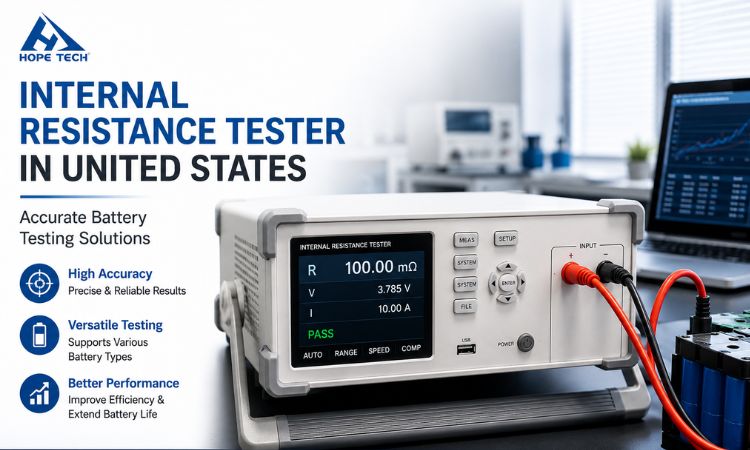
Accurate resistance measurement plays an important role in electrical testing, manufacturing, maintenance, and quality control. Even a small change in resistance can indicate an issue with a connection, winding, cable, component, or conductive material. For companies working with electrical equipment and electronic products, having a reliable testing instrument makes it easier to identify these problems before they become larger ones.
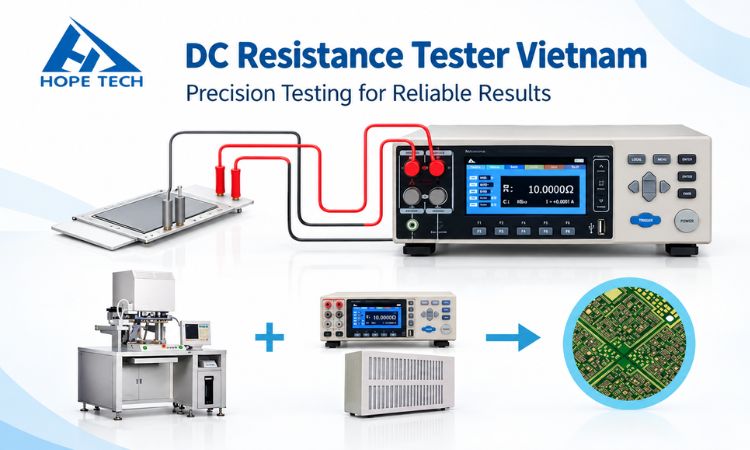
For businesses searching for a DC Resistance Tester Vietnam, the right instrument should provide the measurement range, accuracy, testing speed, and functions needed for the intended application. Hope Instruments provides DC resistance testing solutions for applications ranging from production lines and laboratories to motors, transformers, cables, connectors, and other electrical components.
Why DC Resistance Testing Matters
Resistance testing is commonly used to check whether an electrical connection or component is performing as expected. When resistance is higher or lower than the expected value, it may point to problems such as poor connections, damaged windings, contact issues, or variations in conductive materials.
For manufacturers, this type of measurement can become part of quality inspection. For maintenance teams, it can provide useful information when checking equipment in the field.
The testing requirements can vary considerably depending on what is being measured. A production line may require fast and repeatable measurements, while a maintenance engineer may need a portable instrument for checking larger equipment on site.
What to Look for in a DC Resistance Tester
Choosing a tester should begin with the application rather than simply looking at the lowest resistance value or highest specification.
Important factors include:
- Measurement range: The tester should cover the resistance values required for your components or equipment.
- Accuracy: Reliable measurements are essential when testing low-resistance components.
- Resolution: Higher resolution can be important when small resistance differences need to be identified.
- Testing speed: Fast measurements are particularly useful in production environments.
- Test method: Four-wire measurement reduces the influence of lead resistance in low-resistance measurements.
- Connectivity: Interfaces such as RS232, RS485, LAN, or I/O can be useful for automated testing and data collection.
- Portability: Field technicians may benefit from a compact handheld tester.
The best combination depends on whether the instrument will be used for laboratory measurement, production inspection, equipment maintenance, or another application.
Applications Across Electrical and Electronic Industries
A DC resistance tester can be used across a wide range of products and industries. Hope Instruments’ resistance testing solutions cover applications involving resistors, connectors, switches, relays, transformers, inductors, motors, coils, cables, and other conductive components.
For example, transformer and coil resistance testing can help manufacturers and maintenance teams evaluate winding resistance. Cable and connector testing can be used to check conductive paths and contact resistance, while motor applications may require accurate measurement of winding resistance.
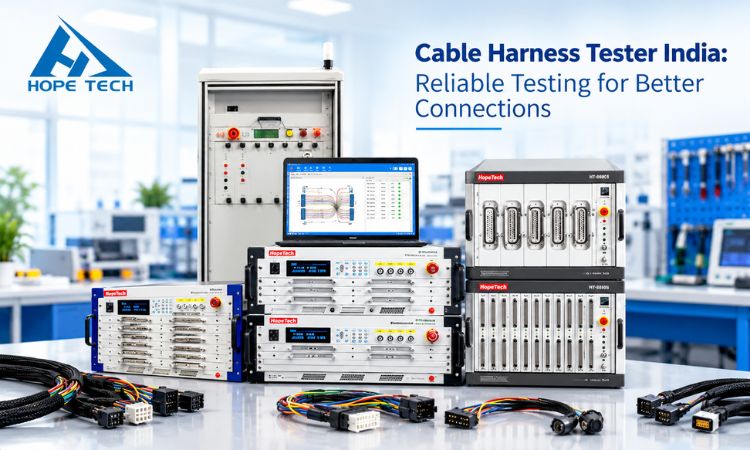
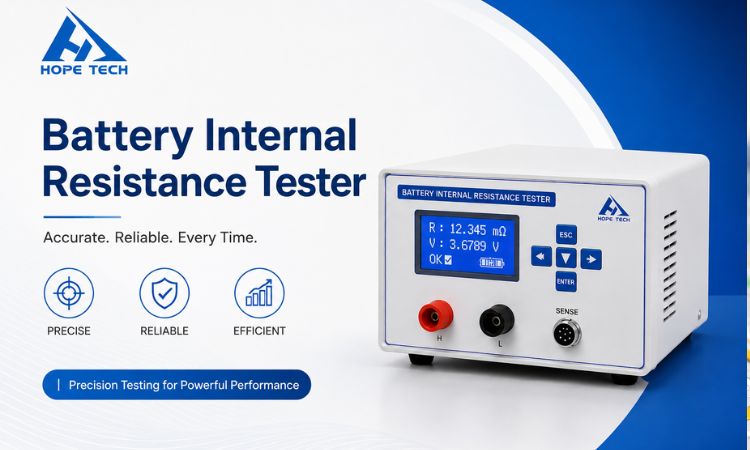
Resistance measurement is also relevant to newer industries. Hope Instruments provides testing solutions for areas including energy storage, electric vehicles, batteries, automotive electronics, solar/PV applications, and cable or harness manufacturing.
Selecting the Right Tester for Your Application
Different testing environments call for different types of instruments.
The HT3544 DC Resistance Tester, for example, offers a measurement range from 0.1 μΩ to 3 MΩ, a minimum resolution of 0.1 μΩ, and basic accuracy of ±0.02% rdg. ±2 dgt. It also supports four-wire testing and includes interfaces such as RS232C/RS485 and LAN I/O for manual or automated production applications.
For applications that require mobility, the HT3548 Handheld Resistance Tester provides a portable option with a measurement range of 0.1 μΩ to 3.3 MΩ and basic accuracy of 0.02%. Its portable design is intended for maintenance and testing of larger equipment.
For high-speed or automated testing, the HT3542 series supports multi-channel configurations, including up to 24 channels in four-wire mode, making it suitable for integration with automated equipment.
These examples show why application requirements should be considered before selecting a resistance tester.
Why Consider Hope Instruments?
Hope Instruments develops electrical test and measurement equipment for industries including automotive electronics, batteries, energy storage, photovoltaic systems, cables, electronic components, and new energy applications.
Its DC resistance tester range includes precision benchtop instruments, high-speed testers, multi-channel systems, and portable solutions. This gives businesses the flexibility to select equipment according to their testing environment and measurement requirements.
For companies in Vietnam, the important consideration is not simply finding a tester with a particular specification. It is finding an instrument that fits the actual components, equipment, production process, and testing conditions involved.
Make Resistance Testing More Reliable
Accurate resistance measurement can support better quality control, maintenance, and production testing across many electrical applications. From transformer windings and motor coils to cables, connectors, components, and conductive materials, the right tester can make routine measurements more consistent and easier to manage.
If you are searching for a DC Resistance Tester Vietnam, explore the resistance testing solutions from Hope Instruments and select a model based on your required measurement range, accuracy, speed, connectivity, and application.
Choose the right resistance testing solution with Hope Instruments and bring greater precision to your electrical testing process.