Electrical insulation plays an important role in protecting equipment, electrical systems, and operators from potential hazards. Proper insulation prevents unwanted current leakage between conductors and other conductive surfaces, helping electrical systems operate safely and efficiently. However, insulation materials can deteriorate over time due to heat, moisture, ageing, mechanical damage, and regular electrical stress.
This makes insulation testing an essential part of electrical maintenance, manufacturing, and quality control. Businesses need reliable insulation resistance testers in India to evaluate insulation performance, identify potential defects, and maintain electrical safety.
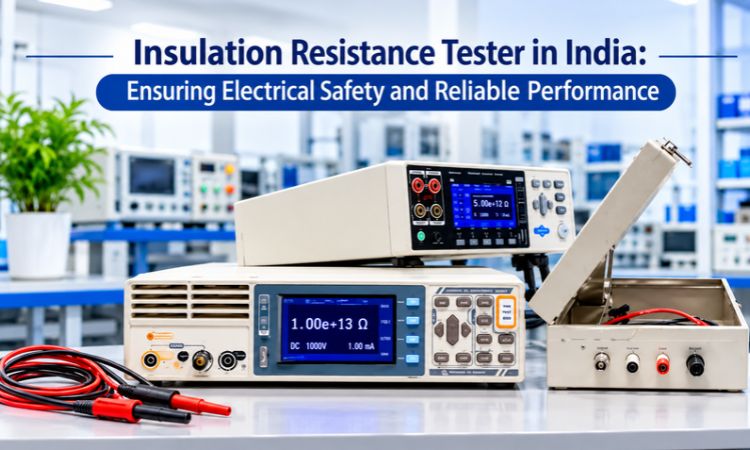
An insulation resistance tester measures the resistance of insulating materials by applying a specified DC test voltage. The results help technicians assess whether cables, motors, transformers, wiring assemblies, and other electrical components have suitable insulation resistance for their intended applications.
Choosing appropriate testing equipment can help manufacturers and maintenance professionals identify insulation problems before they lead to equipment failure or costly downtime.
What Is an Insulation Resistance Tester?
An insulation resistance tester is an electrical measurement instrument used to evaluate the resistance offered by insulating materials against the flow of electric current.
Unlike ordinary resistance measurement, insulation testing generally uses a higher DC test voltage to assess the condition of insulation under specified test conditions. The measured resistance is typically displayed in megaohms (MΩ) or gigaohms (GΩ).
The equipment is commonly used to test:
- Electrical cables and wiring assemblies.
- Motors and generators.
- Transformers and electrical panels.
- Switchgear and control equipment.
- Industrial electrical installations.
- Connectors and electrical components.
Regular insulation testing helps identify deteriorating insulation, unwanted leakage paths, and other potential electrical issues.
Importance of Insulation Resistance Testing
Insulation resistance testing helps manufacturers and technicians evaluate the condition of electrical insulation before equipment is used. It is particularly important in environments where electrical reliability directly affects product performance and operational safety.
1. Early Detection of Insulation Defects
Testing helps identify weak insulation, unwanted leakage paths, and potential electrical faults. Early detection allows manufacturers to investigate problems before products leave the production facility.
2. Improved Electrical Safety
Damaged insulation can increase the risk of electric shock, short circuits, and equipment damage. Regular testing helps assess insulation condition and supports electrical safety procedures.
3. Better Product Quality
Manufacturers can use insulation testing as part of their quality-control process to check whether electrical components meet specified resistance requirements.
4. Reduced Maintenance Costs
Identifying insulation deterioration early can help prevent unexpected equipment failures, costly repairs, and unnecessary production interruptions.
5. Consistent Manufacturing Performance
Modern insulation testers offer programmable testing functions and result comparisons, helping production teams maintain repeatable inspection procedures.
Applications of Insulation Resistance Testers in India
Insulation resistance testing is used across several industries in India, particularly where electrical components and equipment require dependable insulation performance.
- Automotive Industry: Testing insulation in vehicle wiring, electronic components, battery systems, and electrical assemblies.
- Battery Manufacturing: Evaluating insulation resistance in lithium batteries and other power battery components.
- Electronics Manufacturing: Inspecting electronic components, circuit assemblies, and insulating materials.
- Electrical Equipment: Testing motors, transformers, cables, and other electrical products.
- Solar Energy Industry: Evaluating insulation performance in photovoltaic modules and related electrical components.
- Industrial Manufacturing: Incorporating insulation resistance measurements into production inspection and quality-control processes.
How to Choose the Right Insulation Resistance Tester
Selecting suitable equipment depends on the type of material, required test voltage, measurement range, and testing environment.
Consider these important factors before purchasing an insulation resistance tester in India:
- Test Voltage Range: Choose an instrument that provides the DC test voltage required for your application.
- Measurement Range: Check whether the tester can measure the expected insulation resistance values, particularly for high-resistance materials.
- Measurement Accuracy: Reliable measurement accuracy is important when evaluating insulation quality and comparing test results.
- Testing Speed: Production facilities may require faster measurement cycles to maintain inspection efficiency.
- Safety Features: Look for appropriate discharge functions, abnormal-contact detection, and short-circuit protection.
- Connectivity Options: Interfaces such as RS232, LAN, and external I/O can support automated testing and data collection.
- Application Compatibility: Make sure the instrument is suitable for your specific components, cables, batteries, or insulating materials.
Hope Instruments: Advanced Insulation Resistance Testing Solutions
Hope Instruments provides specialised electrical testing and measurement equipment for manufacturers, laboratories, and industrial testing applications. Its insulation tester range includes solutions for high-speed production inspection and precision high-resistance measurements.
Two notable models include:
HT9920 High-Speed Insulation Resistance Tester
The HT9920 is designed for fast insulation resistance testing of electrical components and equipment. Its key features include:
- DC test voltage from 10V to 1000V.
- Measurement range up to 9990MΩ.
- Minimum testing speed of 50ms.
- Contact abnormality and short-circuit detection.
- Automatic discharge function.
- LAN, RS232, and external I/O interfaces.
It is suitable for applications involving lithium batteries, automotive electronics, cables, and electronic components.
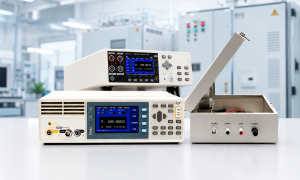
HT3530 / HT3530A Precision Insulation Tester
The HT3530 and HT3530A are designed for applications requiring high-resistance and low-current measurements.
Their capabilities include:
- Resistance measurement from 500Ω to 9.9PΩ.
- Programmable output voltage up to 1000V for HT3530 and 1500V for HT3530A.
- Leakage current measurement down to 10fA.
- Surface resistance and volume resistivity measurement with the appropriate electrode.
- RS232 and Handler interfaces.
These instruments are suitable for testing electronic components, dielectric materials, wires, cables, and insulation materials.
Explore Insulation Resistance Testing Solutions with Hope Instruments
Explore the range of insulation resistance testers from Hope Instruments and contact Hope Instruments today to find suitable precision-focused testing equipment for your electrical testing requirements in India.